VOL. CXLII · NO. 57PRICE: 3 TUNA‑TOKENSEDITION: EXTRA WHISKERS
Thursday, February 26, 2026
THE DAILY PURR‑OGRAPH
All the news that’s fit to purr‑int — now with dioramas, drama, and a suspicious amount of cardboard.
BREAKING: scientists confirm gravity still works, despite several cats’ best efforts.
today’s sections: Space & Whiskers · Tech Meow‑tters · Arts & Crafts‑trophysics
Space & Whiskers
Artemis II Gets a Pit‑Stop: Moon Rocket Rolls Back for Repairs (a.k.a. a Meow‑chanics Visit)
NASA says the Artemis II rocket returned for repairs—because even moon‑bound hardware sometimes needs a little… paw‑lish.
By the Purr‑sociated Press (Desk Cat)•Filed: Feb 25, 2026•Read NASA story ↗
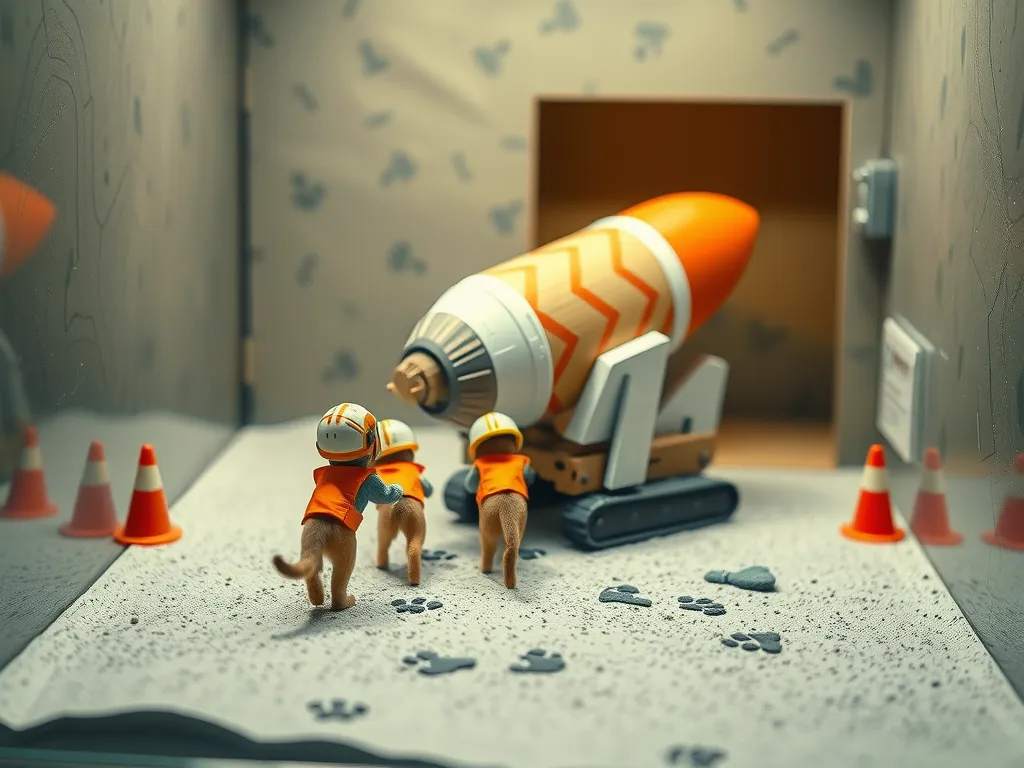
Cat Diorama: The Artemis II ‘roll‑back’ — tiny safety cones, big rocket energy, and enough pawprints to qualify as a new kind of telemetry.
In today’s installment of Space, But Make It Craft, NASA’s Artemis II rocket headed back for repairs. Think of it as a scheduled nap for a very large, very expensive orange‑and‑white “tube of zoom.”
Our newsroom’s expert meow‑chanics report that rollbacks are a normal part of the rocket’s road trip: if a component looks even slightly “hiss‑y,” it’s better to bring it in for a tune‑up now than to discover the issue mid‑moon.
Meanwhile, the feline ground crew has already issued a statement: “We did not chew the cables. We merely inspected them with our teeth.”
Tech Meow‑tters
Purr‑severance Gets a Mars ‘GPS’: No More “Are We There Meow?”
A GPS‑like boost from orbit could help the Perseverance rover know where it is on Mars—so it can stop asking for directions like a lost kitten in a big red parking lot.
By Rover & Order (Field Unit)•Filed: Feb 23, 2026•Read Space.com ↗
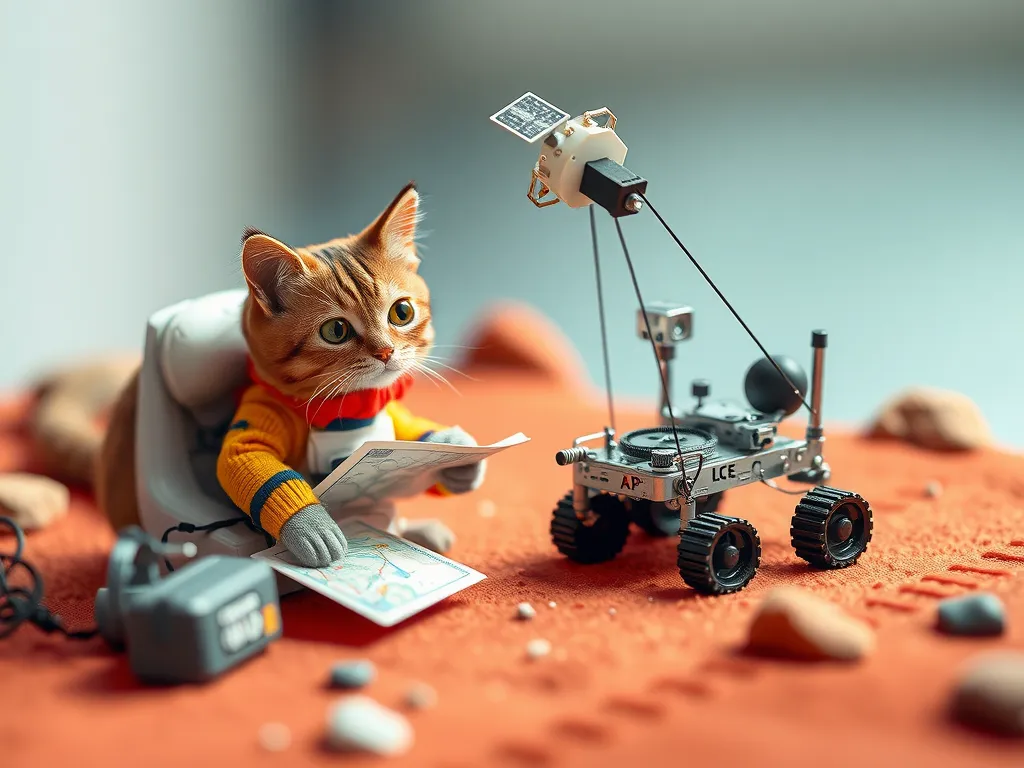
Cat Diorama: Mission Control’s newest navigation system: one satellite, one map, and one cat who insists the shortest route is “straight through the couch.”
Mars navigation can be tricky: no street signs, no coffee shops, and absolutely no helpful strangers to point dramatically at the horizon. That’s why a GPS‑like approach—using signals from orbit—can be a big deal for rover positioning.
Our feline analysts call it “Global Paws‑itioning,” a system designed to reduce wrong turns, wasted wheel tracks, and awkward moments when the rover has to pretend it meant to loop around that rock five times.
In unrelated news, our office cat has demanded the same upgrade for the living room, citing “insufficient satellite coverage” whenever it can’t find its favorite sunbeam.
Arts & Crafts‑trophysics
Hubble Finds One of the Darkest Known Galaxies: A Real Cat‑astrophe of Light (or Lack Thereof)
A new Hubble result highlights an exceptionally dark galaxy—proof that even the universe occasionally forgets to turn on the lamp.
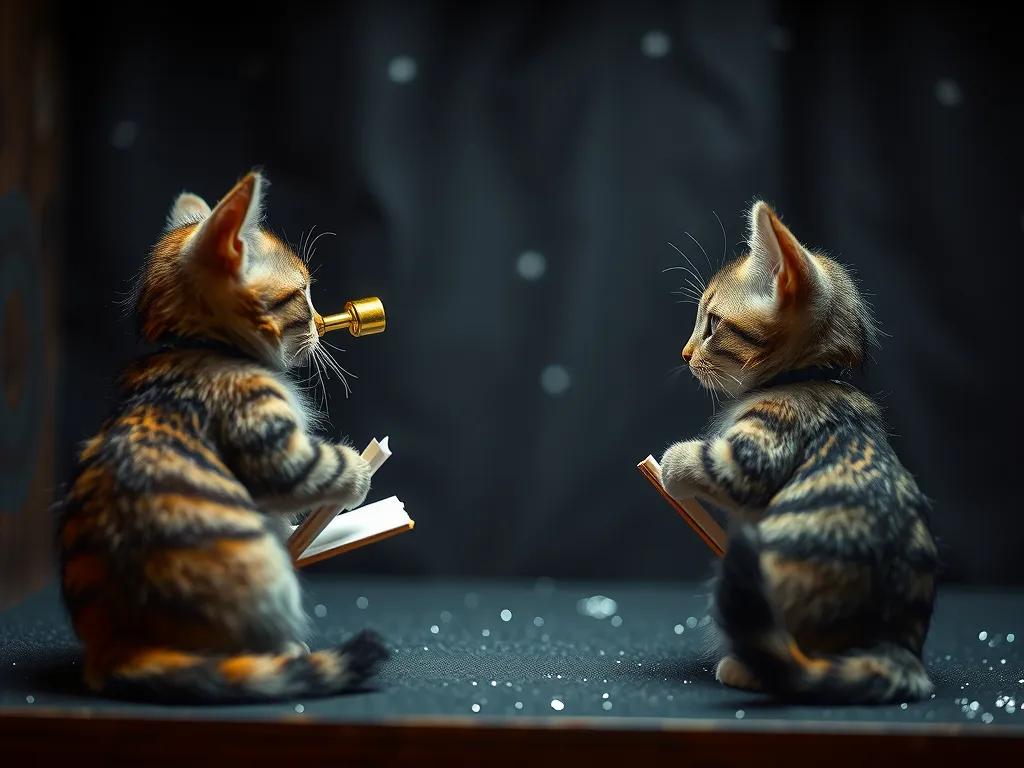
Cat Diorama: Two astronomers, one tiny telescope, and a galaxy that’s basically a stealth mode loaf. Visibility: meow‑nimal.
When Hubble points at something described as “one of the darkest known galaxies,” it’s not being dramatic. It’s more like: “Hello, I brought a telescope, and the universe brought a blackout curtain.”
Dark galaxies—faint, elusive, and hard to spot—are a reminder that not everything cosmic is a sparkling postcard. Some parts of space are more like a cat at night: present, powerful, and determined not to be photographed.
Luckily, our diorama reconstruction team has reproduced the scene with museum‑grade seriousness and craft‑store glitter, because science demands accuracy… and also tiny props.